
Track Record
The material on this page is presented in two ways:
Direct experience-led case studies, where the project is tied to the experience base of the platform and described accordingly
Illustrative sector case studies, where the project is shown as a representative example of the kind of institutional-grade BTR asset aligned with the team’s construction, commercial or operational leadership capability
We believe that is the right approach for serious capital: clear, useful and properly framed.
CASE STUDY 01
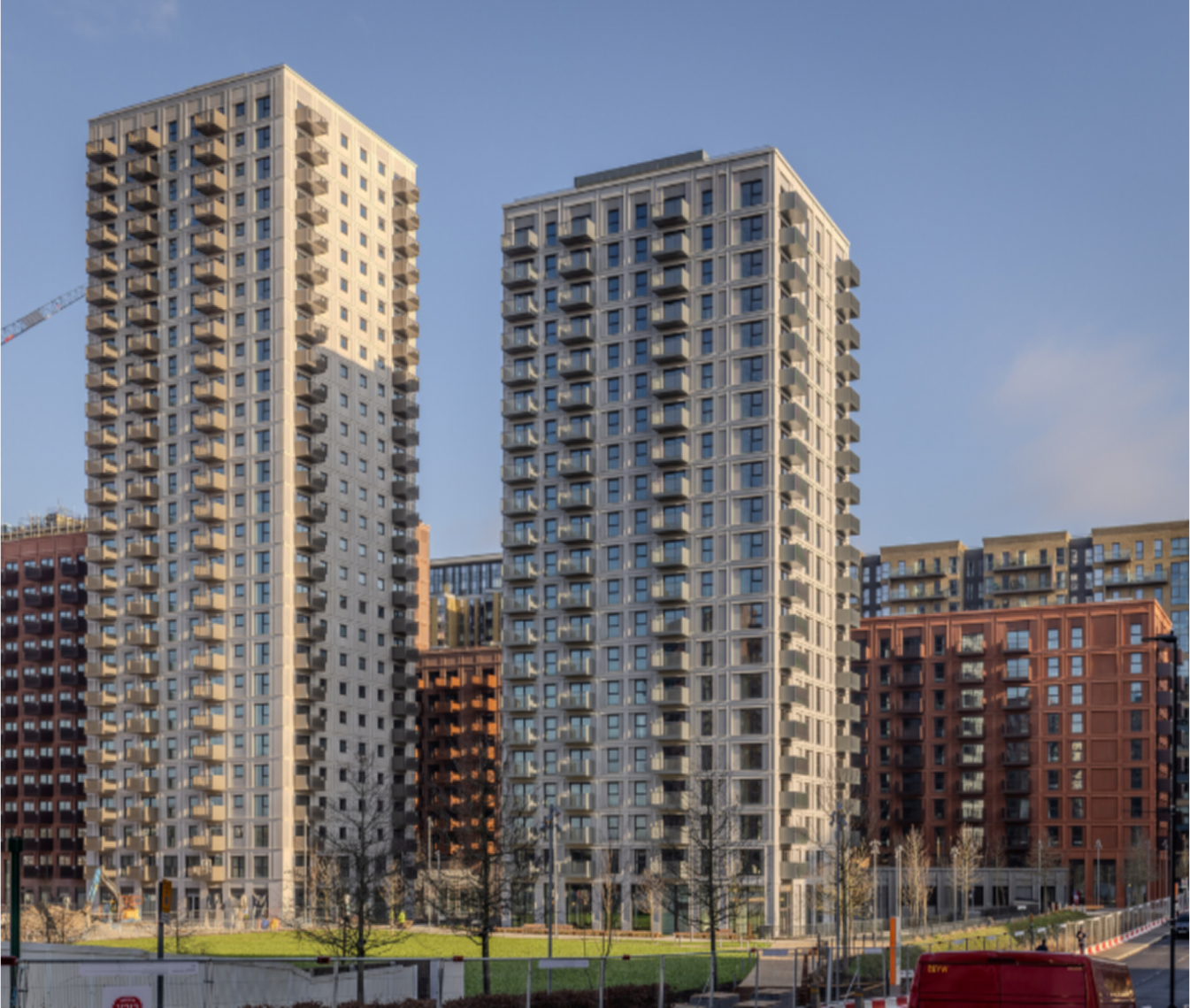
Luna, Wembley Park, London
Direct experience-led case study
- Role context: Build-to-Rent Development Director
- Platform context: Quintain / Quintain Living
- Project type: Large-scale Build-to-Rent, mixed-tenure residential-led development
The project is highly relevant because it sits within one of the UK’s most significant institutional rental neighbourhoods. Quintain has described Wembley Park as the UK’s largest single-site BTR location, and later reported 6,000 homes of all tenures completed at the estate by September 2025.
Project summary
Luna was delivered not simply as a construction project, but as a fully functioning BTR investment product for long-term rental operation under the Quintain Living platform. The scheme’s residential mix included 181 market-rent homes, 52 Discount Market Rent homes and 49 Premium apartments, with amenity including a 21st-floor roof terrace, an 8,148 sq ft landscaped podium garden, a gym, work-from-home / co-working areas, a 2,723 sq ft resident lounge, and a bookable entertainment space known as the “Black Hole.”
Why this case study matters
Luna demonstrates the kind of development leadership institutions look for in an operating partner: the ability to move beyond simple delivery and ensure that a building works as a long-term rental product from day one. That means aligning apartment mix, amenity, common parts, servicing, back-of-house, operational practicality and resident experience with the needs of a professional rental platform.
Delivery and capital context
Luna was delivered within Quintain’s wider NE02/NE03 package, procured under a £227 million fixed-price construction contract with John Sisk & Son, covering 769 homes across the two plots. The wider package was supported by a £277 million development financing deal with J.P. Morgan.
That context matters because it places the scheme within a major capital programme environment, where delivery leadership must operate with commercial discipline, programme control, stakeholder management and investor-grade reporting expectations.
Technical and operational relevance
The wider phase incorporated a substantial DFMA / offsite-led strategy. Publicly reported metrics across the phase included 1,802 offsite-manufactured façade panels, 972 bathroom pods and 752 balconies, with approximately 22,000 cubic metres of concrete poured. Haworth Tompkins also reported embodied carbon outcomes of 473 kgCO2e/m² GIA and 497 kgCO2e/m² GIA across the two buildings, supported by a standardised design and efficient manufacture-and-assembly approach.
As the project moved toward completion, the leadership challenge was not only delivery through construction but also operational readiness: apartments, amenities, commissioning, testing, snagging, phased handover, defect protocols and coordination with the operating team so the asset could enter occupation smoothly under the Quintain Living brand. Quintain publicly announced Luna complete on 31 March 2025.
What this demonstrates
Taken as a whole, Luna shows relevant experience in the delivery of a large institutional rental asset within a major London regeneration platform: product definition, consultant and contractor coordination, programme and risk management, mixed-tenure integration, amenity-led resident offer, offsite-influenced technical execution, and the transition from construction into live operation.
CASE STUDY 02
International Way, Stratford, London
Illustrative construction and commercial leadership case study
- Team alignment: Andy — Senior Construction Director | Tom — Senior Commercial Director
- Career context: Telford Homes
- Project type: Forward-funded Build-to-Rent / mixed-tenure residential-led development
Located next to Stratford International station, International Way comprises 380 homes across two 26-storey towers, including 247 Build-to-Rent homes, 54 Discount Market Rent homes and 79 London Affordable Rent homes, together with podium-level office and commercial space. Telford states the redevelopment sits on a 1.1-acre site, while Savills described Legal & General as forward funding the entire scheme in Telford Homes’ largest-ever BTR forward-funding transaction at the time.
Why this scheme is relevant
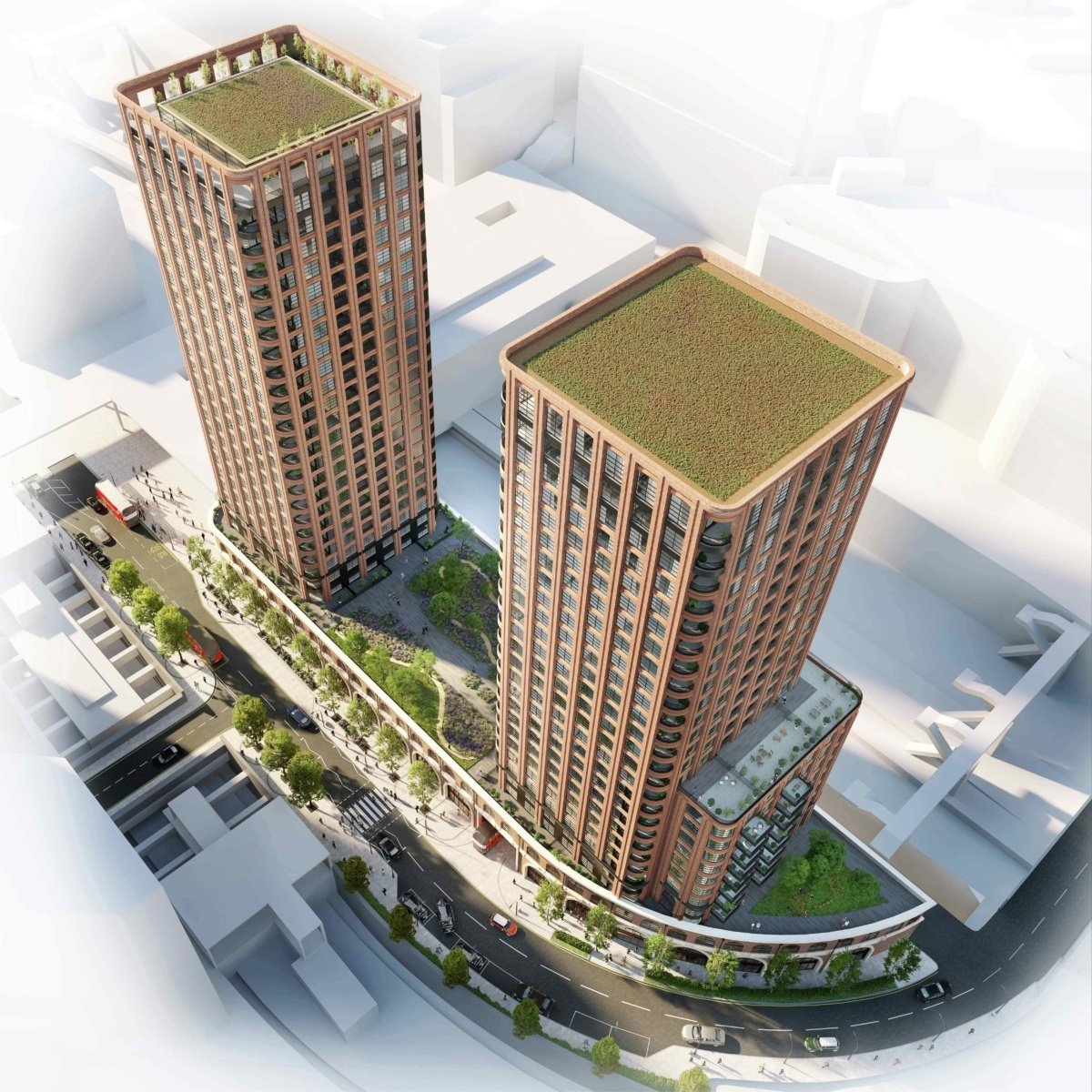
International Way is useful because it reflects many of the characteristics institutions care about in a professionally delivered BTR asset:
- institutional forward-funding structure
- high-rise urban delivery
- mixed-tenure residential model
- integrated amenity and commercial space
- a building expected to transfer efficiently into long-term professionally managed occupation
Those are exactly the kinds of project conditions where construction leadership and commercial leadership need to operate in close alignment.
Illustrative role alignment: construction leadership
On a project of this type, a Senior Construction Director would typically lead the client-side construction and delivery agenda across buildability, contractor interface, programme, sequencing, technical coordination, quality, commissioning and handover.
On a BTR asset, that role extends beyond reaching practical completion. It usually includes ensuring the finished building is operationally practical and leasing-ready: robust common parts, amenity delivery, plant and servicing logic, resident arrival experience, defect minimisation and smooth transition into occupation. This is an inference drawn from the project’s BTR structure and publicly described resident offer.
International Way also appears to carry meaningful technical complexity. Staticus describes the project as including 22,300 m² of façade across the two towers, and public project descriptions reference sustainability and performance ambitions alongside community-oriented amenity. That kind of scheme would typically require strong construction-side coordination across façade interfaces, sequencing, quality assurance and performance delivery.
Illustrative role alignment: commercial leadership
On a project of this type, a Senior Commercial Director would typically lead procurement, tender strategy, budget control, change management, contract discipline, contingency protection and commercial risk management throughout the development cycle.
That matters especially on a forward-funded BTR scheme, where commercial discipline must support not just construction delivery but investor confidence and long-term asset quality. On an institutional rental asset, commercial leadership is not simply about reducing cost. It is about balancing capex discipline with durable specification, amenity quality, resident appeal, operating efficiency and long-term value. This is an inference drawn from the forward-funded structure and the BTR nature of the project.
What this demonstrates
International Way is a strong supporting case study because it illustrates the type of major London BTR project environment in which:
- construction leadership must protect buildability, quality, programme and handover
- commercial leadership must protect cost discipline, contract control and value
- both functions must operate with institutional ownership expectations in mind
For that reason, it is a useful representative reference for the sort of senior construction and commercial capability relevant to this platform.
RELEVANT PLATFORM EXPERIENCE
Quintain / Quintain Living
Telford Homes
Grainger
Moda
Insights
We hope that you find the report informative and that it provides better insight into our journey.